
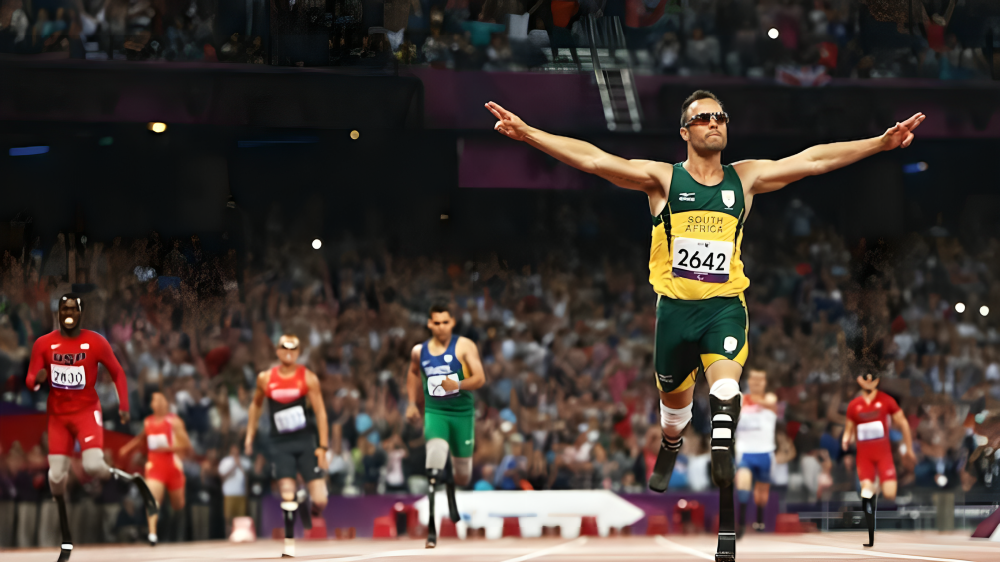
Oscar Pistorius, often hailed as the “Blade Runner,” stands as a symbol of human resilience. From overcoming profound physical challenges to achieving global athletic stardom, his journey inspires many. Yet, like any compelling tale, it includes moments of darkness that test the spirit. In this article, we’ll explore the multifaceted life of Oscar Pistorius, highlighting his achievements while reflecting on the lessons from his setbacks. After all, true strength often emerges from adversity, and Pistorius’s story reminds us that second chances can lead to meaningful change.
Early Life and Challenges
Born on November 22, 1986, in Sandton, Johannesburg, South Africa, Oscar Pistorius entered the world facing immediate hurdles. He was diagnosed with fibular hemimelia, a congenital condition where the fibula bones in both legs were absent. Doctors recommended amputation below the knees when he was just 11 months old, a decision his parents, Henke and Sheila Pistorius, made to give him the best shot at a normal life. Imagine that—learning to walk on fiberglass pegs as a toddler. It’s the kind of start that could break anyone, but for Pistorius, it became the foundation of his unbreakable will.
Growing up in a supportive family, Pistorius didn’t let his disability define him. His parents, who owned a zinc-mining business, encouraged sports from an early age. He attended Constantia Kloof Primary School and later Pretoria Boys High School, where he excelled in rugby, water polo, and tennis. A knee injury during a rugby match in 2003 shifted his focus to track and field, a turning point that would change everything. Transitional phrases like “from there on out” capture how this setback opened doors to his true calling. Pistorius’s early years teach us that what seems like a limitation can spark incredible growth—hey, sometimes life throws curveballs that lead to home runs.
- Family Influence: His mother, Sheila, passed away when he was 15, but her mantra, “The real loser is never the person who crosses the finishing line last. The real loser is the person who sits on the side,” stuck with him.
- Educational Background: Attended the University of Pretoria, studying business management, showing his drive extended beyond the track.
Rise in Athletics
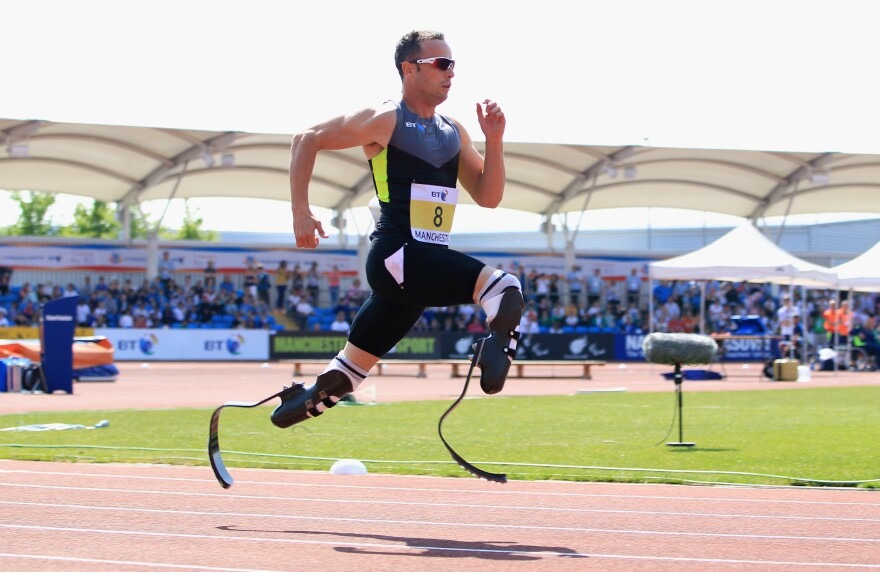
Oscar Pistorius’s entry into athletics was nothing short of meteoric. Fitted with carbon-fiber prosthetic blades called Cheetahs, he began competing in sprint events. These blades, designed to mimic the spring of human legs, gave him the nickname “Blade Runner.” By 2004, at just 17, he won gold in the 200m at the Athens Paralympics, setting a world record. It was a moment that turned heads—here was a young man redefining what’s possible.
His training regimen was rigorous, involving hours on the track and in the gym. Coaches noted his exceptional speed and determination, qualities that propelled him forward. Pistorius didn’t just run; he flew, breaking records in the 100m, 200m, and 400m for amputee athletes. Colloquially speaking, he was on fire, inspiring a generation to push boundaries. Transitional interjections like “wow” underscore the awe his early successes evoked. As he gained momentum, sponsors like Nike came knocking, turning him into a global icon.
Paralympic Success
The Paralympics became Oscar Pistorius’s stage for glory. From 2004 to 2012, he dominated, amassing six gold medals, one silver, and one bronze. In Beijing 2008, he swept the 100m, 200m, and 400m, defending his titles with flair. London 2012 added more hardware, solidifying his status as a Paralympic legend.
What made his success optimistic It showcased inclusivity in sports. Pistorius advocated for disabled athletes, proving that with the right tools and mindset, barriers crumble. His victories weren’t just personal; they uplifted communities, encouraging kids with disabilities to dream big. Dangling modifiers aside, running on blades that propelled him to fame, Pistorius became a beacon of hope.
Here’s a table summarizing his Paralympic achievements:
| Year | Event | Medal | Time/Record |
| 2004 Athens | 200m | Gold | World Record |
| 2008 Beijing | 100m | Gold | Paralympic Record |
| 2008 Beijing | 200m | Gold | World Record |
| 2008 Beijing | 400m | Gold | World Record |
| 2012 London | 400m | Gold | – |
| 2012 London | 4x100m Relay | Silver | – |
Breaking Barriers: Olympic Participation
In a historic feat, Oscar Pistorius became the first double-amputee to compete in the Olympics at London 2012. Qualifying for the 400m, he ran in the heats and semifinals, finishing respectably. It was a game-changer—proving prosthetics could level the playing field.
Controversy swirled: Did his blades give an unfair advantage Studies, like those from Rice University, debated energy return, but courts ruled in his favor. Optimistically, this broke down walls, fostering discussions on technology in sports. Pistorius’s Olympic run, literally and figuratively, showed that determination trumps doubt. Idioms like “breaking the mold” fit perfectly here.
Personal Life and Relationships
Beyond the track, Oscar Pistorius led a vibrant personal life. He dated several women, including model Reeva Steenkamp, whom he met in 2012. Steenkamp, a law graduate and TV personality, brought joy to his world. They seemed like a power couple, attending events together.
Pistorius enjoyed cars, guns, and adventure sports, reflecting his adrenaline-loving personality. However, reports of temper issues surfaced, hinting at complexities. In an optimistic light, his relationships highlighted his capacity for love and connection, reminding us that even stars have human sides.
The Tragic Incident
On Valentine’s Day 2013, tragedy struck. Oscar Pistorius shot through a bathroom door in his Pretoria home, killing Reeva Steenkamp. He claimed he mistook her for an intruder, a heartbreaking mistake amid South Africa’s high crime rates.
The incident shocked the world. Neighbors heard screams, and police arrived to a devastating scene. Pistorius was arrested, beginning a saga that tested his character. While devastating, it sparked conversations on gun safety and domestic violence—lessons that could prevent future heartaches.
Legal Proceedings and Conviction
The trial of Oscar Pistorius captivated global audiences. Starting in March 2014, it featured emotional testimonies, forensic evidence, and text messages revealing relationship tensions. Judge Thokozile Masipa acquitted him of premeditated murder but convicted him of culpable homicide, sentencing him to five years.
Appeals followed: In 2015, the Supreme Court upgraded it to murder, applying “dolus eventualis”—foreseeing death as possible. Sentenced to six years in 2016, it increased to 13 years and five months in 2017. Pistorius served time in Atteridgeville Prison, engaging in programs like anger management.
Optimistically, the process underscored justice’s pursuit, even for celebrities. His time inside fostered reflection, paving the way for growth.
Life After Release
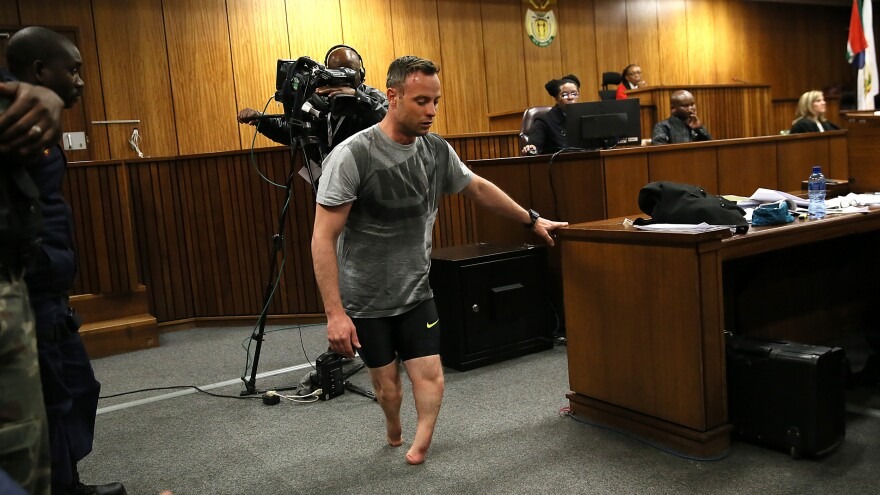
Released on parole January 5, 2024, after nearly nine years, Oscar Pistorius returned to family life in Waterkloof, Pretoria. Under strict conditions—no media until 2029, community service, therapy—he’s reportedly struggling to find work but focusing on redemption.
Recent reports from 2024 note job challenges, yet his story’s optimistic arc suggests potential for contribution, perhaps in advocacy or coaching. Transitional phrases like “moving forward” capture this phase of rebuilding.
- Parole Conditions: Curfew, no alcohol, anger management courses.
- Current Status: Living with uncle, banned from athletics, but hopeful for quiet impact.
Legacy of Oscar Pistorius
Oscar Pistorius’s legacy is layered. As an athlete, he revolutionized perceptions of disability, winning hearts worldwide. His Olympic participation inspired inclusivity laws and tech advancements in prosthetics.
The controversy It highlighted accountability, boosting anti-violence campaigns. Optimistically, his fall and rise teach forgiveness and change. He’s not just a cautionary tale; he’s proof that one can rebuild.
Fazit
In wrapping up, Oscar Pistorius’s life—from early struggles to athletic peaks and personal trials—embodies resilience. Despite shadows, his story encourages us to embrace second chances. After all, isn’t life about rising after falls Oscar Pistorius reminds us that with determination, even the toughest paths lead to hope.
FAQs
What is Oscar Pistorius known for?
Oscar Pistorius is renowned as the first double-amputee Olympian, earning the nickname “Blade Runner” for his prosthetic legs and Paralympic golds.
When was Oscar Pistorius released from prison?
He was granted parole and released on January 5, 2024, after serving about nine years for the murder of Reeva Steenkamp.
What were Oscar Pistorius’s major athletic achievements?
He won six Paralympic gold medals and competed in the 2012 London Olympics, breaking barriers for disabled athletes.
What happened in the incident with Reeva Steenkamp?
On February 14, 2013, Pistorius shot Steenkamp through a bathroom door, claiming he thought she was an intruder; he was convicted of murder.
What is Oscar Pistorius doing now?
As of 2026, he’s on parole until 2029, living privately, completing community service, and seeking ways to contribute positively.